What is Specification Management?
Specification Management is the process of centralizing DNA-level product and packaging data — the requirements, standards, and characteristics every product must meet — into a single system of record. When that information is interconnected and accessible in real time, it becomes a true source of truth that helps supply chain teams work efficiently, reduce risk, and drive traceability from raw material to shelf.

Types of Specifications
- Product specifications define what a finished good must be — ingredients, dimensions, materials, and performance requirements.
- Packaging specifications govern how a product is packaged, labeled, and transported.
- Manufacturing specifications outline the processes, tolerances, and instructions required to produce the product consistently.
In a spec-first supply chain, all three are linked, meaning a change in one automatically surfaces its downstream impact on the others.
What Does a Specification Manager do?
A specification manager is responsible for creating, maintaining, and governing product and packaging specifications across the supply chain. This typically includes building out spec templates, managing version control, coordinating with suppliers and R&D teams on spec accuracy, and ensuring specifications stay aligned with regulatory and quality requirements.
In organizations using a Specification Data Management platform, this role shifts from manual data chasing to strategic oversight, because the system handles the version control and stakeholder visibility automatically.


Specright’s purpose-built platform solves 3 fundamental problems
A lack of common language around specifications
A lack of common language around specifications often results in miscommunication, errors, and SKU proliferation. Without a templated approach to spec creation, it’s challenging to work efficiently and get teams on the same page.
Incomplete data or a lack of critical components
Data is often owned by many different departments and suppliers. Without a central source of information that updates in real-time to all necessary stakeholders, teams must manually request and search for data across other departments and suppliers. When all necessary product and packaging data is not readily available, it’s difficult to manage Bills of Materials (BOMs) and slows speed-to-market.
The inability to share up to date information
Before Specification Management, sharing specs often occurred via static formats, from emails, to spreadsheets, and even pen and paper. This made it virtually impossible to collaborate across departments and supply chains, as well as inhibiting supply chain visibility and traceability.
Revolutionizing supply chain collaboration with patented technology
Chasing data is old news. Specification management is not. Specright built the first patented Specification Data Management™ (SDM) platform of its kind.
Without Specright, specification data is typically housed in an array of static systems—whether it’s email, spreadsheets, legacy systems, or shared drives. These static systems often result in siloed data that lacks the accessibility and standardization needed to function as a source of truth for the supply chain, inhibiting collaboration.
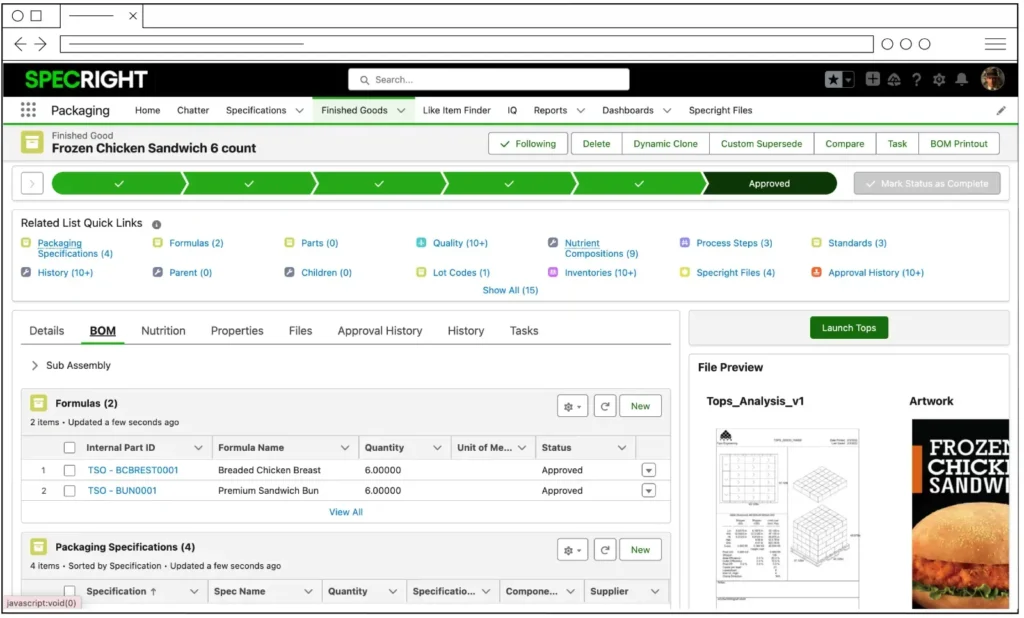
The many-to-many relationship structure of the Specright platform enables companies to link together all the data related to making a product, from its packaging, quality, and manufacturing specifications and more.


Frequently asked questions
Have questions? Check out the FAQs. For any questions not listed, reach out to us via our ‘Contact Us’ form.
What is Specification Management?
Specification Management is the process of building and centralizing DNA-level product and packaging information (requirements, standards, characteristics, ect.) into a centralized and connected system. In doing so, teams can create a single source of truth that enables supplier collaboration, regulatory compliance, and supply chain traceability.
What is Specification Data Management?
Specification Data Management (SDM) is a category of software, pioneered by Specright, that goes beyond storing specs to actively linking them together. When specifications are mapped and interconnected, from packaging to ingredients to manufacturing instructions, the data becomes actionable intelligence rather than static documentation.
Why is specification management software important?
Without a purpose-built specification management platform like Specright, product data lives in spreadsheets, emails, and shared drives — making version control, supplier collaboration, and compliance nearly impossible at scale. Spec management software creates a real-time, centralized record that every stakeholder can trust.
What are the three types of specifications?
Specifications span from product specifications to. packaging specifications to manufacturing specifications and beyond. In a connected spec management system, changes to any one of these automatically surface their impact on the others.
What is the role of a specification manager?
A specification manager creates, governs, and maintains product and packaging specifications across the supply chain. Working and coordinating cross-functionally between R&D, quality, procurement, and suppliers to ensure specs are accurate, current, and accessible. Spec management platforms reduce the manual burden of this role significantly.
Discover the value of Specification Management
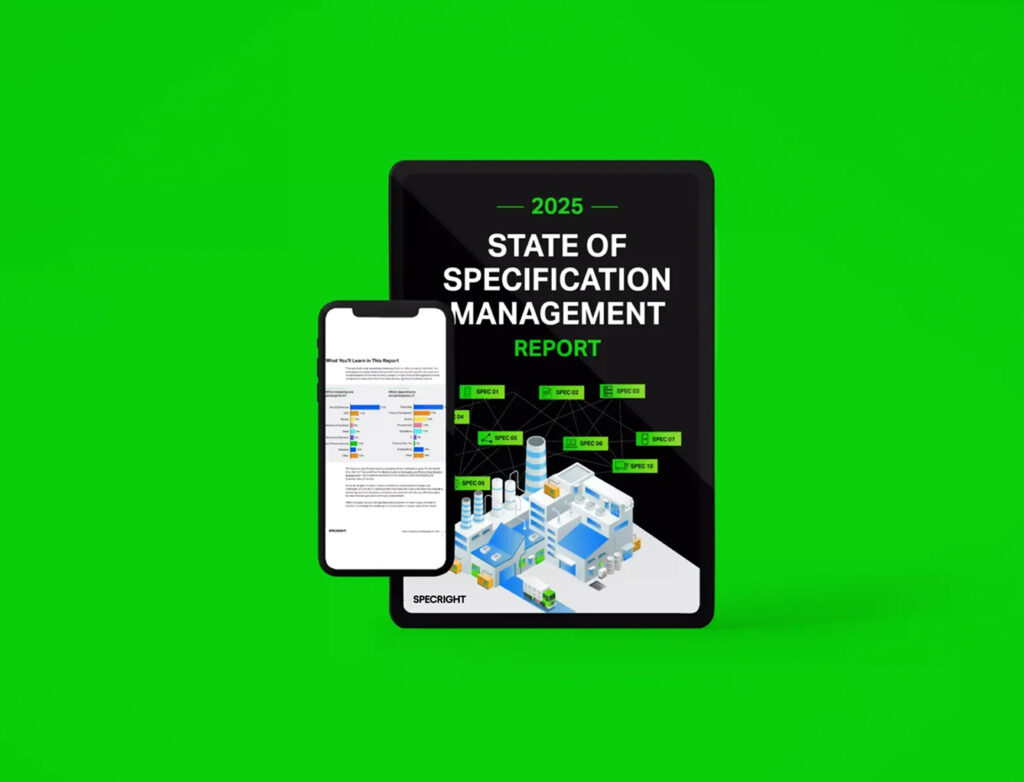
2025 State of Specification Management Report
Companies are managing more complex specification data than ever—but outdated systems are holding them back. Our 2025 report reveals the top challenges facing packaging and supply chain teams today, from poor data accuracy and version control to mounting sustainability regulations.
Learn why 75% of respondents say they need better Specification Management, and how leading teams are transforming data chaos into competitive advantage.
Specification Management Adoption Guide
Learn about:
Discover the Impact of Specification Management
Access our free resource library, and learn how to focus your data strategy, innovate, and drive your bottom line growth from industry experts.
-

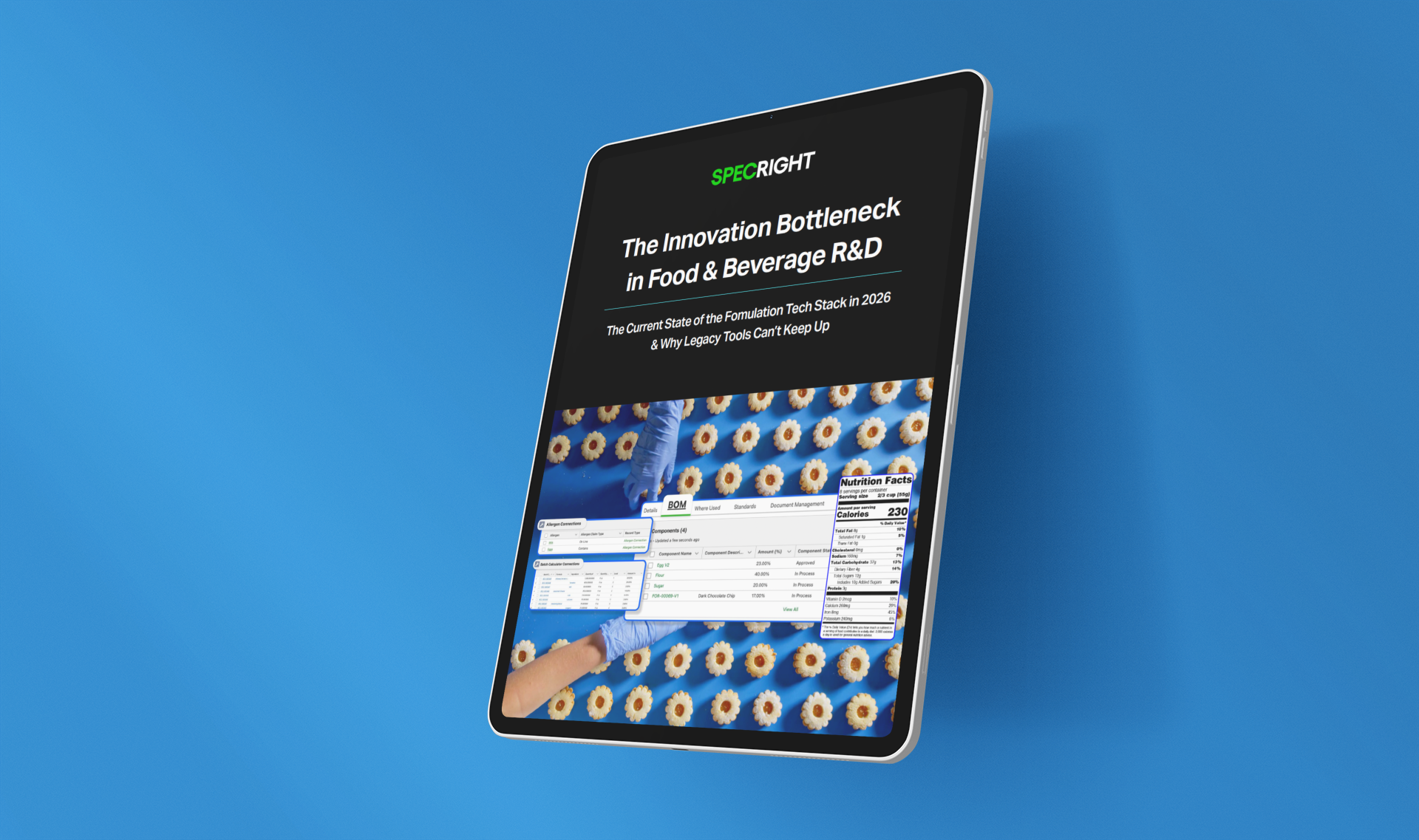
The Innovation Bottleneck in Food & Beverage R&D
Read More →: The Innovation Bottleneck in Food & Beverage R&D -

Specright Showcases AI-Powered Platform at Spec Summit 2026
Read More →: Specright Showcases AI-Powered Platform at Spec Summit 2026 -

The AI Data Crisis: Why Most AI Projects Fail
Read More →: The AI Data Crisis: Why Most AI Projects Fail