Specright’s Specification Data Management Platform
The Specification Management Platform for Products and Packaging
Specright is a specification management platform that breaks products down into structured, connected spec data, from raw materials and formulas to packaging and finished goods. Our patented, cloud-based Specification Data Management™ (SDM) platform enables you to manage your specs in one place, ensuring data accuracy and enabling collaboration across teams & suppliers.
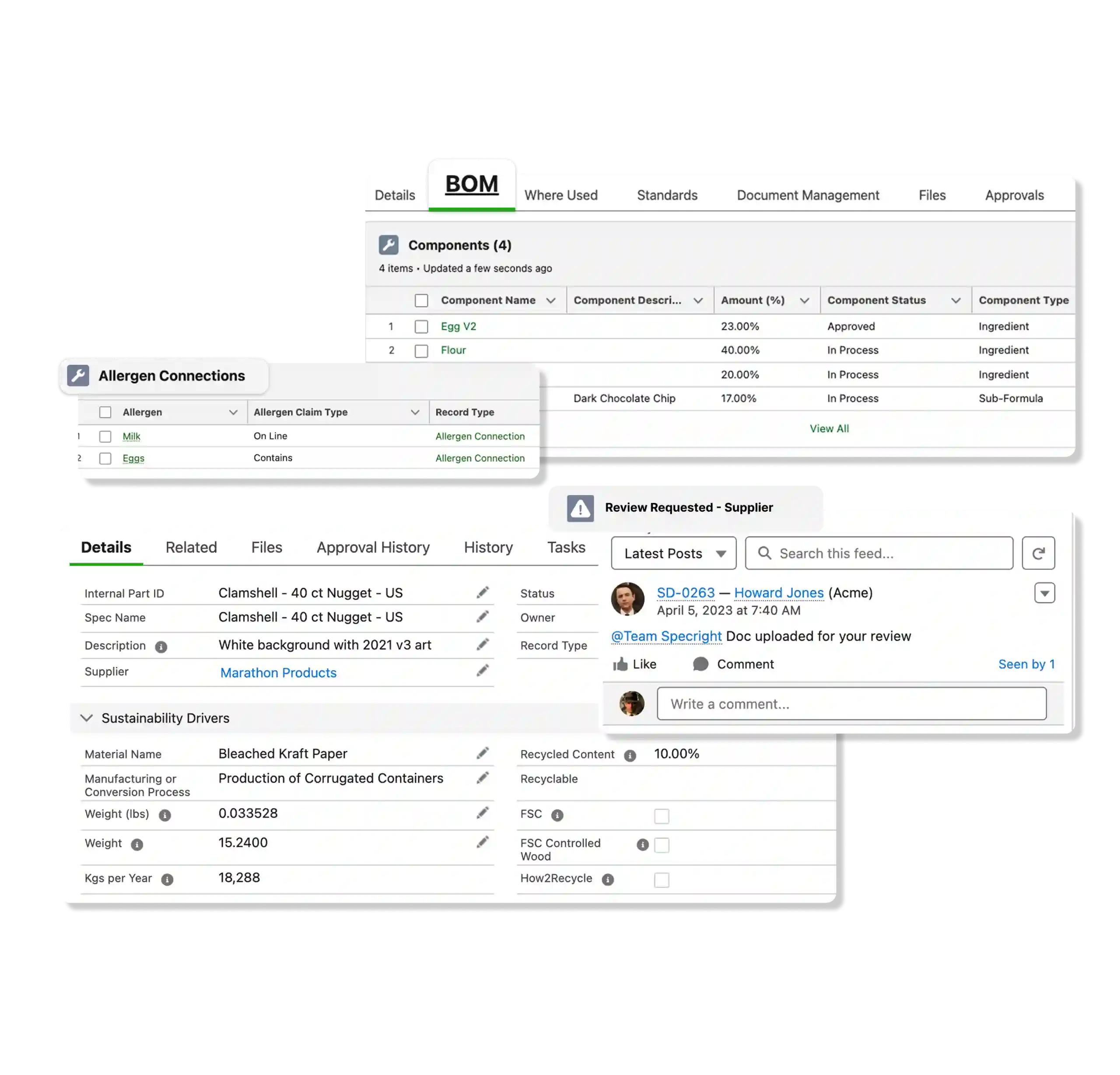
Specification management software centralizes and standardizes a product’s specs — its raw materials, formulas, packaging, and bills of materials — across a company and its suppliers. Specright takes that spec-first: it treats every spec as a live, linked data field, so one change cascades to every formula, label, and finished good that uses it.
Specification management software, built spec-first
Specright is purpose-built for fast-moving consumer goods:
- Food & Beverage — recipes, formulas, allergen tracking, and food-safety compliance.
- Beauty & Personal Care — formulations, ingredient and label management, and cosmetics compliance.
- Consumer Goods & Private Label — SKU rationalization and single-source product data across suppliers.
- Packaging — component specs, recycled-content tracking, and automated EPR reporting.

Trusted by C-Suite
“What we’re doing with Specright is strengthening up the whole product life cycle management process. We have some island systems today that do some of these things, but all of those challenges – disconnected systems, arguments about data… these things just don’t make sense now. With Specright, we decided to put this PLM system in place and actually drive it forward.”

Frank Ardite
Global Quality & Digitization Director, BASF

“We’ve created a technology ecosystem where I’m not waiting on technology. And that’s why I really like Specright. That’s why I’m here is because they’re great partners when it comes to that. We work together.”

Aron Kolosik
Chief Supply Chain Officer, Central Garden & Pet

“Expanding our partnership with Specright to manage specification data across the entire product life cycle was an easy choice and sets us up for success in enhancing and developing innovative products while also ensuring our workforce is more efficient.”

Andy Norman
CIO, Bob Evans Farms
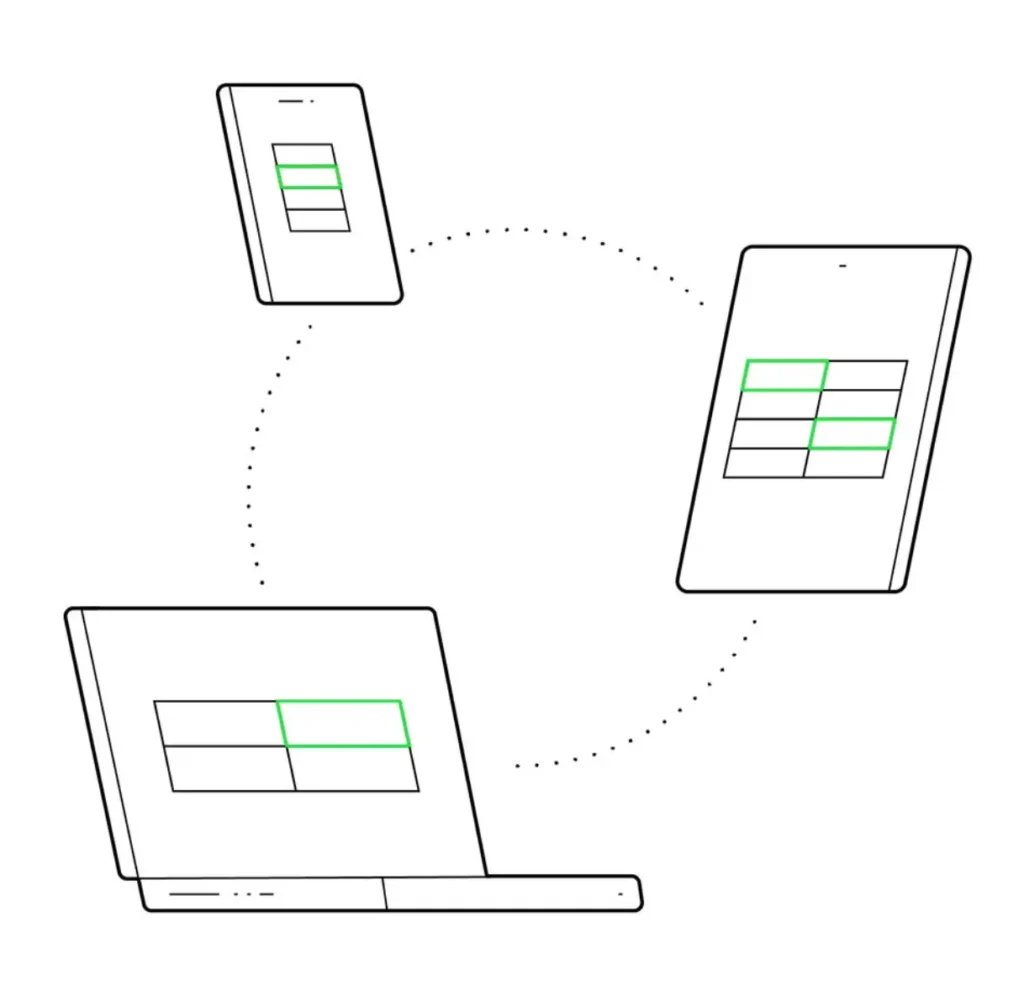
Our Architecture: A Secure & Stable Cloud-Based Platform Built for Specs
Our data architecture is centered around and optimized for specs, making the data in our platform more searchable, traceable, and ultimately more usable for your business. Cloud-based means both internal and external users have immediate, 24/7 access – anywhere in the world.
Specright runs on enterprise-grade cloud infrastructure built for the scale, reliability, and security that large manufacturers require. All our Specright services are SOC2 compliant from security, confidentiality, and availability trust perspectives.
Impact Metrics
5M
+
Products
94%
Customer Retention
300%
+
Average ROI
10%
+
Reduced Risk of Recalls
Streamline Your Product Development Process: One Platform for All Your Spec Needs
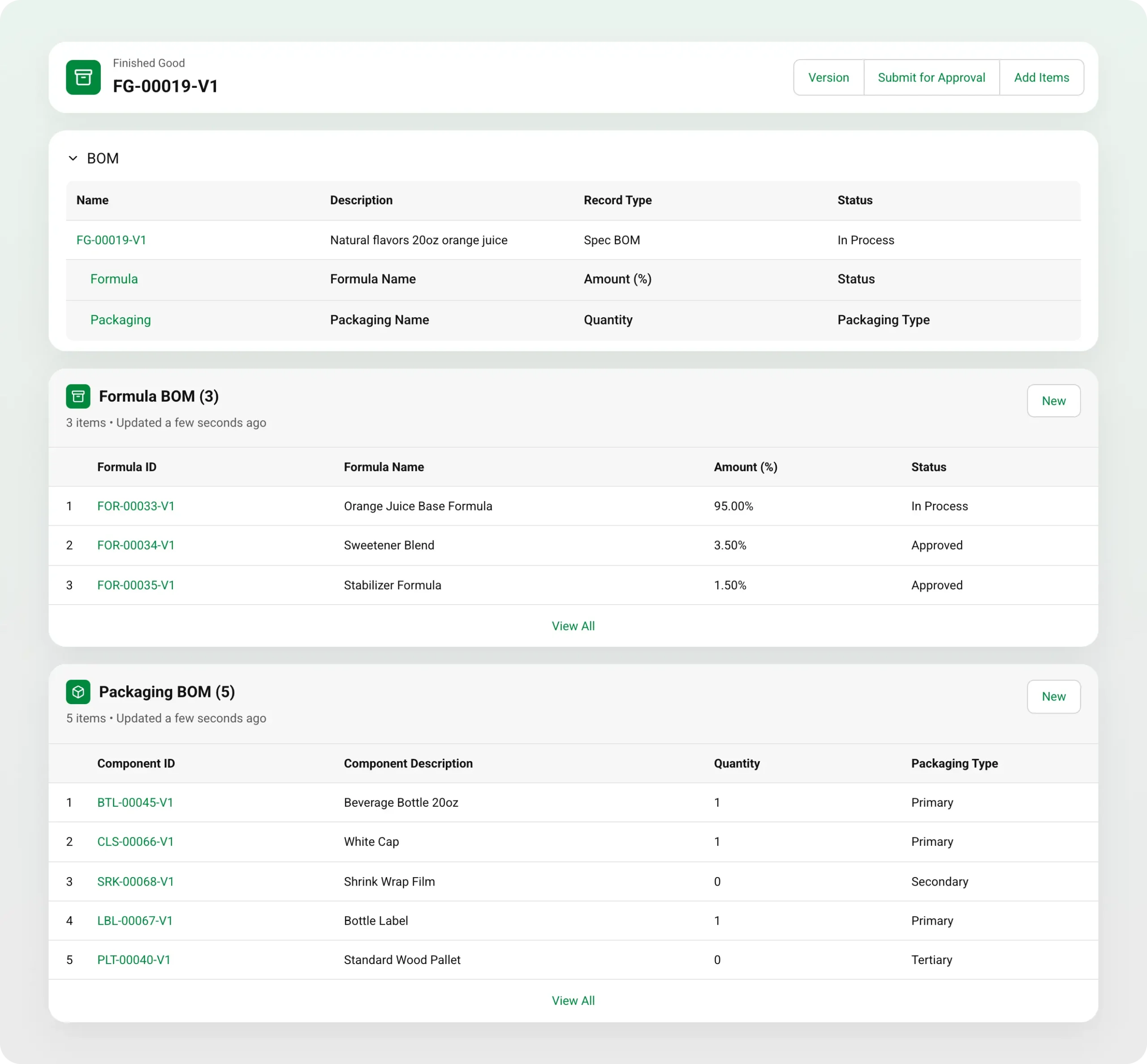
Specright gives product, packaging, and supplier teams a single source of truth for every spec. Digitize and standardize specifications, from raw materials, formulas, ingredients, packaging, products, and finished goods in one cloud-based platform. Easily link specs together to form sub-assemblies, bill of materials, and finished goods.
Key Features
- 150+ spec templates help you standardize and digitize data
- Universal search helps you find data in any spec or related document
- Built-in analytics flag duplicate specs and prevent SKU proliferation
- Version control, supersede, and history tracking for changes
Transform Data into Action with Real-Time Recommendations
Specright IQ scans all of your existing specifications to help identify recommendations to help you save costs or drive sustainability.
Key Features
- Cost savings recommendations
- Sustainability recommendations
- SKU rationalization recommendations
How Specright Compares
The typical tech stack includes common systems like Enterprise Resource Planning (ERP), Product Lifecycle Management (PLM), and data visualization tools to help companies collect, view, and aggregate data. However, these systems aren’t designed to structure, manage, and share data at the spec level.
ERPs are financial tools, while PLMs are used to create complex products (e.g. a jet engine). Data visualization tools are better for aggregating data than structuring and managing it.
Specification management software was developed specifically to fill this gap and give companies a way to unify their systems. Currently, many specifications are stored as static spreadsheets or PDFs. With specification management software, all information is stored in the cloud and updated in real time, so users can trust they’re seeing the most recent information. Specification management software turns previously static data into living, breathing, up-to-the-minute data. By using APIs and integrations to streamline communication, specification management software becomes a single source of truth for all spec data to save time and resources and improve speed-to-market and quality.
| Specright | Legacy PLM | ERP | Spreadsheets/PDFs | Document control/tools | |
| Core Focus | Spec data as the system of record | Product development processes and documents | Running operations: orders, inventory, procurement, financials | Ad hoc tracking of specs in files | Storing and approving static documents |
| Built For | Fast-moving consumer goods (FMCG), notably food & beverage, personal care, and cosmetics | Broad industries; not specific to consumer goods complexity | Operational execution at enterprise scale | Individual teams needing quick, one-off tracking | Quality and regulatory teams managing controlled documents |
| Data Model | Patented SpecGraph: many-to-many connections across every spec, supplier, and product | Static documents and attachments | Item and material masters; no granular spec detail | User-defined rows and columns; structure set by author | Documents and metadata organized in folders or records |
| Platform | Cloud-native, API-first SaaS on one connected platform | Typically standalone enterprise software | Large transactional system of record for operations | Desktop or cloud files shared by email or drives | Standalone repository for files and approvals |
| Integrations | Connects to leading ERP, CRM, QMS, sustainability platforms | Commonly integrates with ERP through connectors or custom work | Broad APIs; integrates with PLM, CRM, and finance systems | None; manual copy-paste between systems | Limited; documents aren’t linked to systems |
| Supplier Network | AI maps and validates supplier data submitted in any format | Limited; supplier updates handled manually | Vendor records only; no spec collaboration | Batch emails, chasing responses, manual normalization | Document routing and sharing with external parties |
| AI Approach | Spec-grounded AI Assistant, agents, and deterministic logic | AI bolted on to existing modules | Varies by vendor; AI embedded in planning and finance | None; no structure for AI to use | Document search only; no data to reason over |
| Sustainability & Compliance | Generate reports for EPR, PPWR, and Declarations of Conformity from specs | Varies by vendor; often via add-on modules or partners | Limited visibility into sustainability and EPR | Manual, error-prone, hard to audit | Tracks documents, not component-level compliance data |
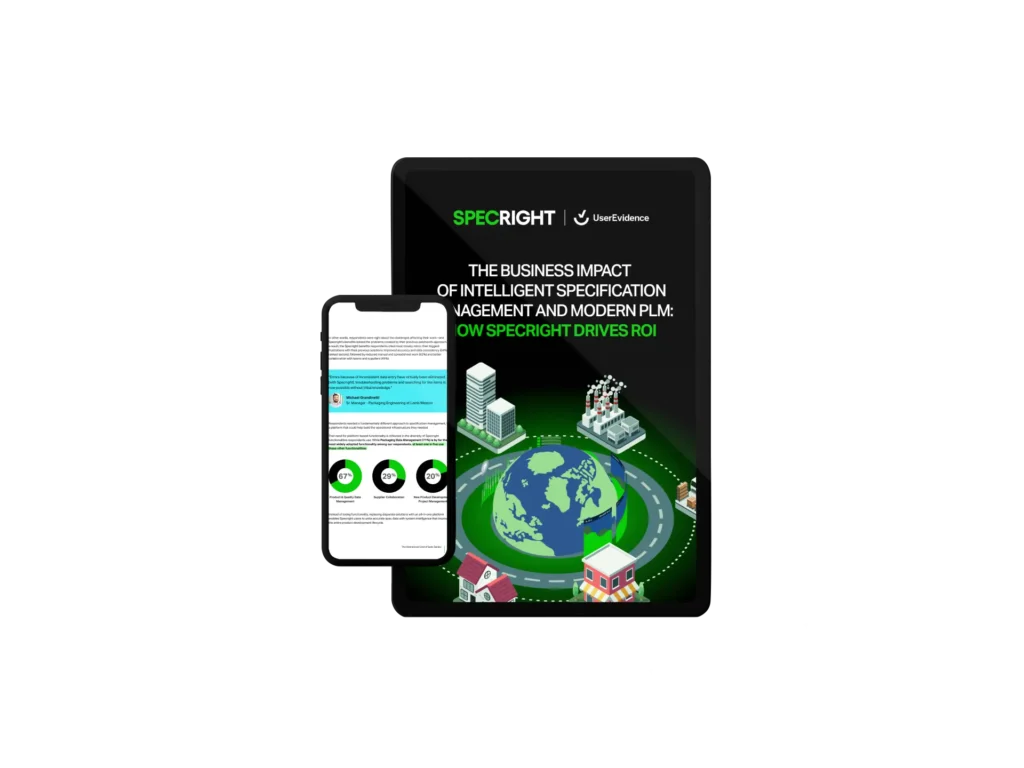
2026 ROI Report: The Business Impact of Modern Spec Management
Most spec management problems don’t announce themselves. They show up as suppliers using outdated formulas, labels that don’t reflect the latest change, or approvals that sit in someone’s inbox for two weeks. The friction is real, but gets absorbed as normal.
This report, produced in partnership with UserEvidence, surveyed verified Specright customers to surface the tangible impact of moving to a structured, spec-first platform. The findings are based on real organizations, real workflows, and real results.
Everything You Need in One Platform

Packaging Management
Our digital, searchable platform puts data at your fingertips – and keeps your packaging teams on the same page.

Product Data Management
Accelerate time to market with clean, up-to-date product data shared across teams and suppliers.

Supplier Collaboration
Bring suppliers into your spec-first PLM for faster collaboration with accurate, up-to-date specs and shared workflows.

Formulation, Labeling & Claims
Create and optimize formulas in one place, from concept to claims, with AI-driven automation and insights.

Project Management
Centralize specs, projects, and suppliers to accelerate speed-to-market.

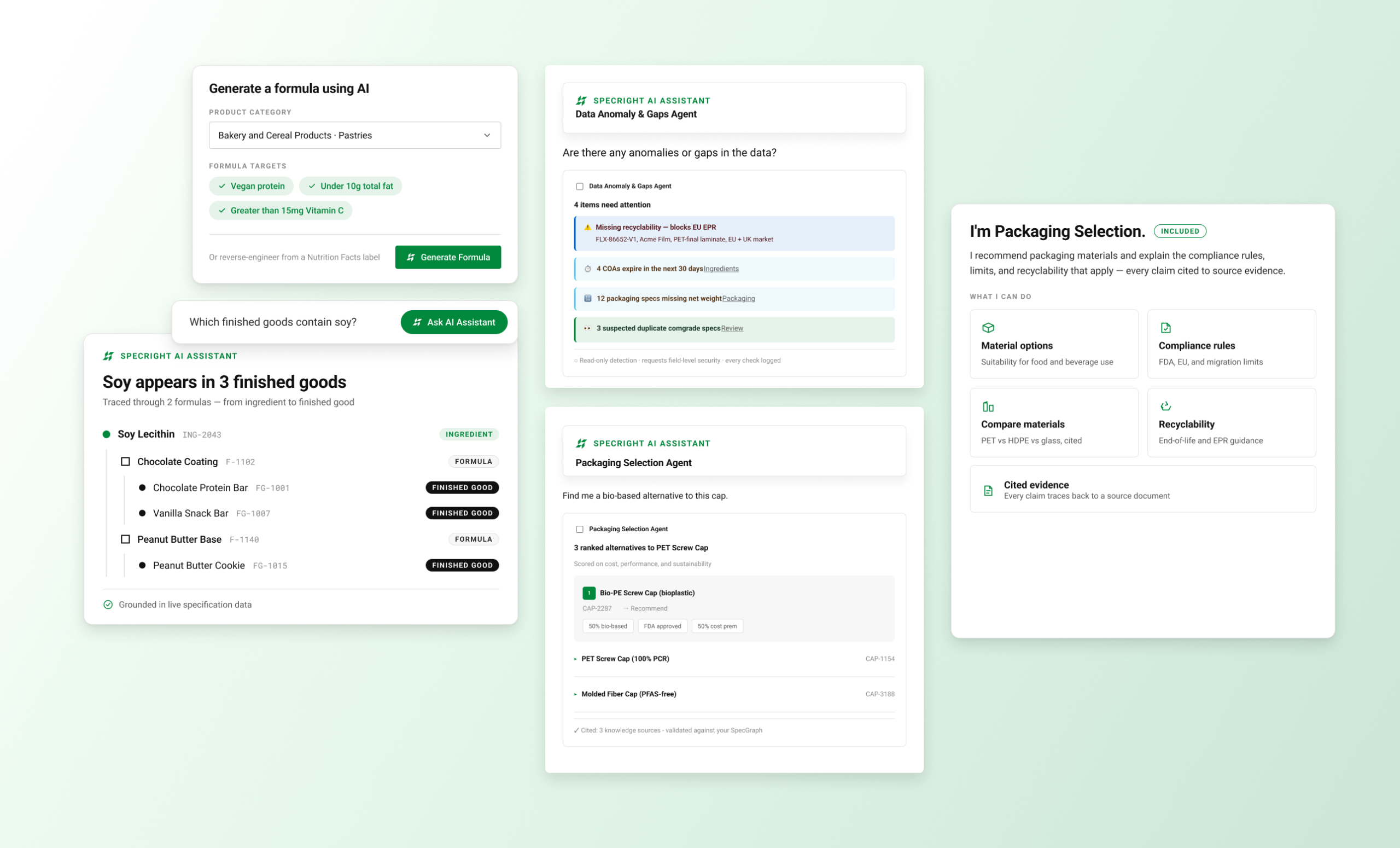
Specright AI Assistant
Actionable intelligence is built into every layer of the platform—AI Assistant answers in natural language, tracing allergens, formulas, and packaging hierarchies straight from your connected spec data, with every answer traceable back to its source record.
What is spec chaos costing your team?
Get a glimpse of what you could save.
Trusted by Fortune 500, private label retail & challenger brands





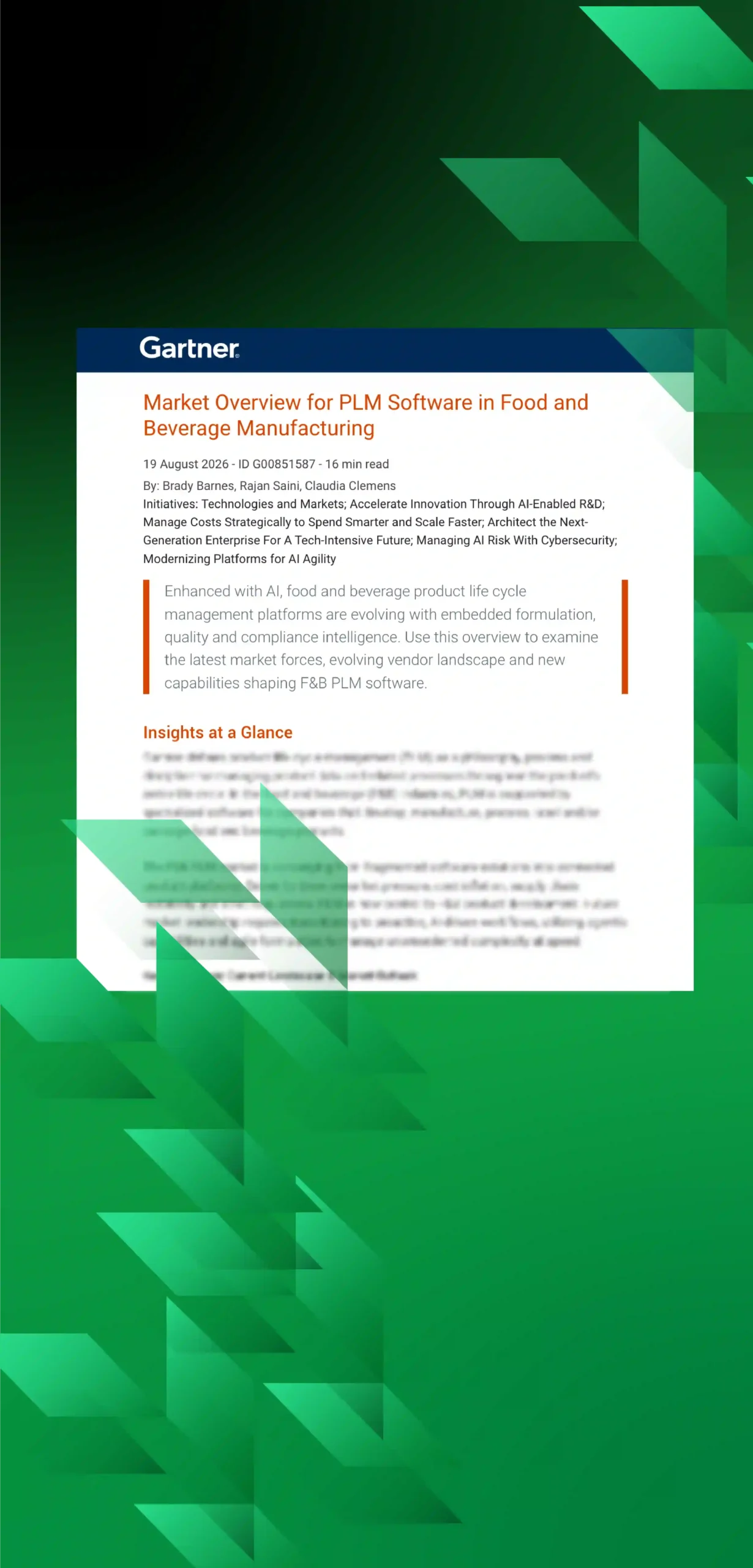
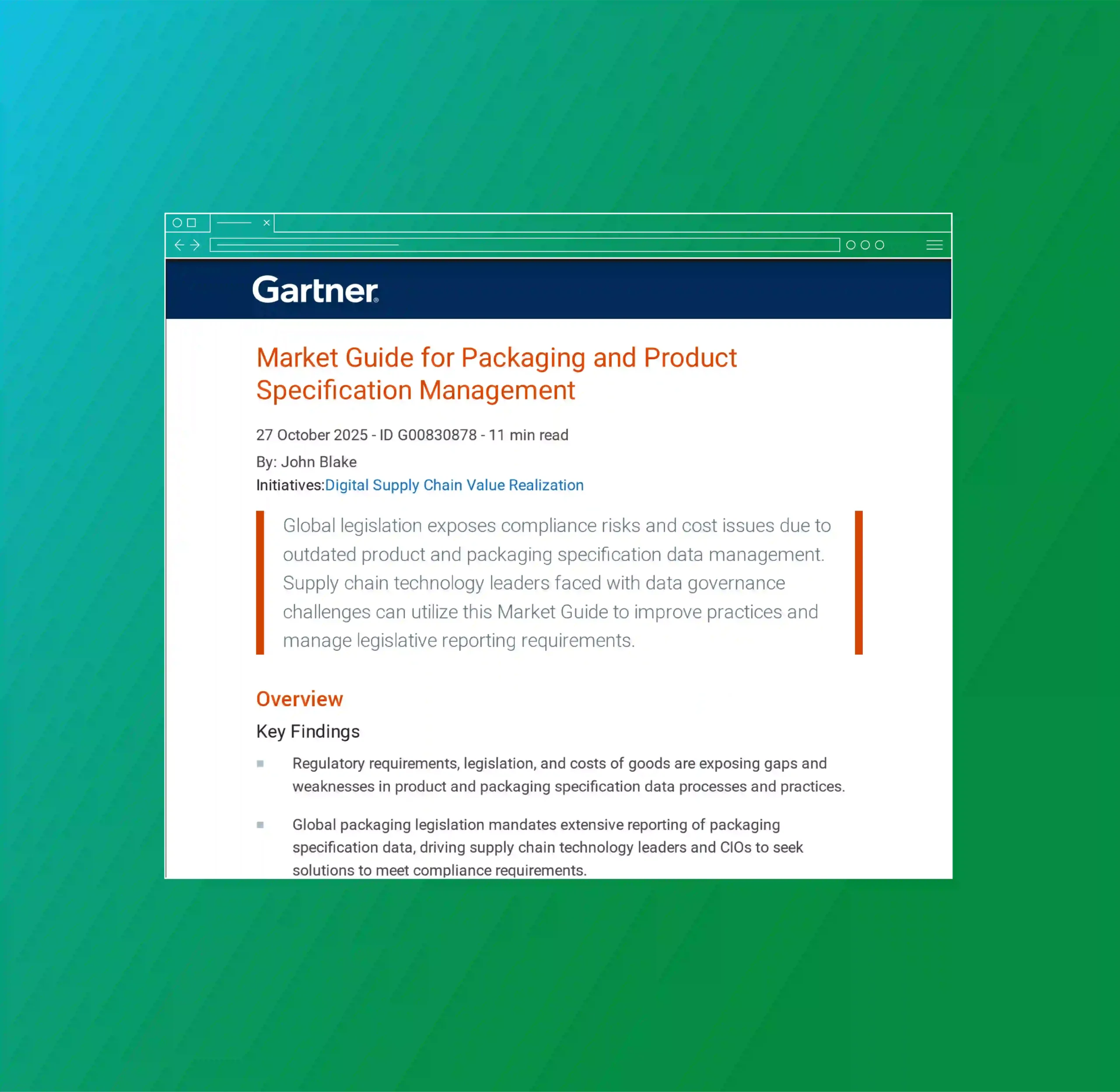
2025 Gartner® Market Guide for Packaging & Product Specification Management
Global regulations like PPWR and EPR are no longer future concerns — they’re business-critical realities. According to Gartner’s 2025 Market Guide for Packaging and Product Specification Management, companies face real risks of market access loss and financial penalties if their data isn’t ready for compliance reporting. At the same time, Gartner underscores a growing truth: AI innovation depends on high-quality, structured specification data — and that’s where Specright excels.
Easily Integrate with Your Existing Systems





What is specification management software?
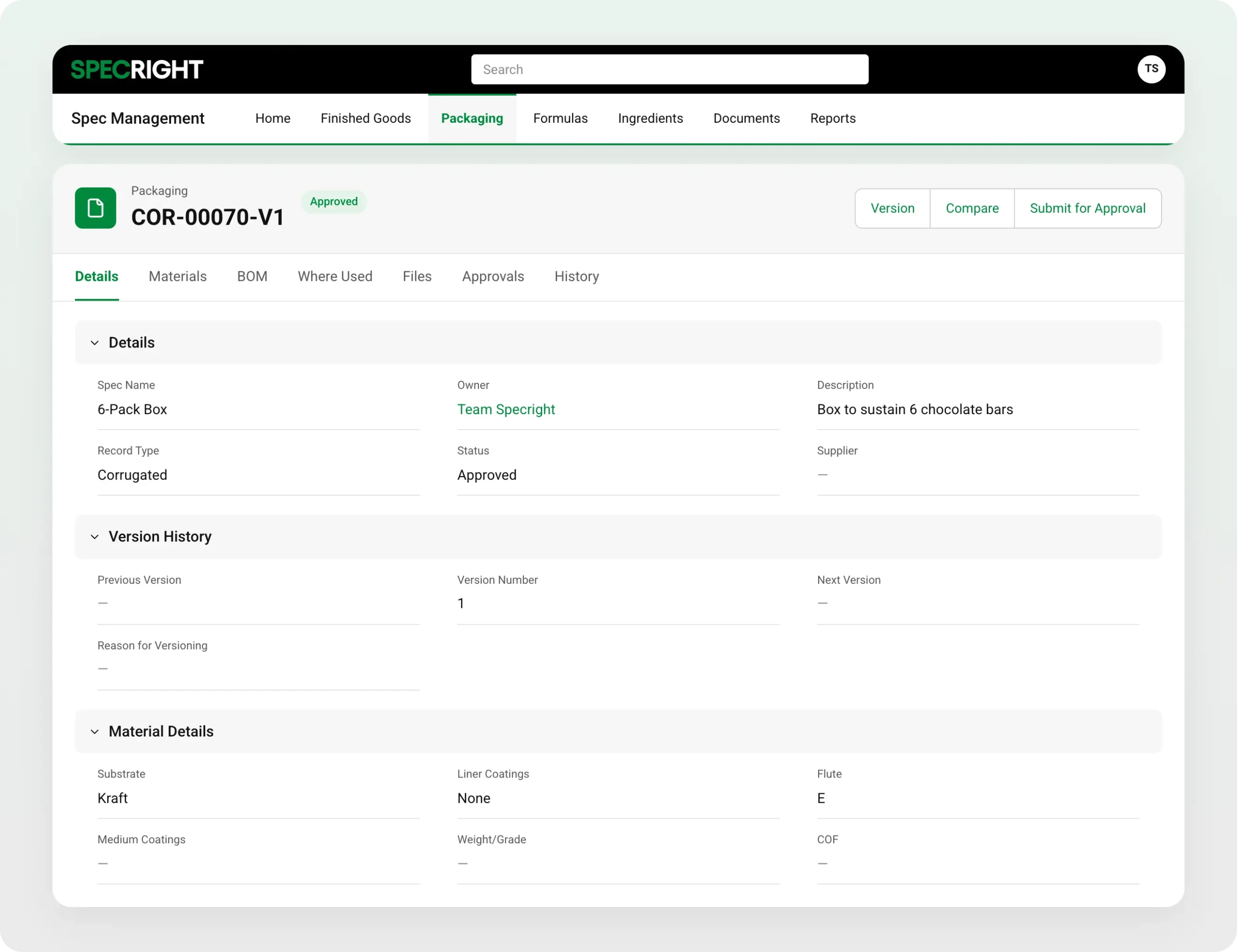
Specification management software is a system of record for the data that defines products and packaging: materials, dimensions, formulas, BOMs, artwork, and sustainability attributes. Specright's specification data management platform replaces spreadsheets, PDFs, and shared drives with structured, version-controlled specs, connected across R&D, quality, procurement, and suppliers.
How is it different from PLM?
Legacy PLM SaaS platforms manage processes and documents, often storing specs as static attachments. Specright's spec-first PLM makes specifications the system of record. One ingredient or supplier change flows through every formula and finished good, giving AI, compliance, and ERPs structured data.
Who uses Specright today?
Specright is used by brands, manufacturers, and retailers across North America, EMEA, and APAC, with over 5 million finished goods on the platform. Customers span food and beverage, consumer health and beauty (including pet and vitamins), industrial and chemicals (including packaging and pulp and paper), and retail and distribution. Named customers include Lowe's, Albertsons, Unilever, Colgate-Palmolive, Taylor Farms, and Georgia-Pacific.
Does Specright integrate with SAP/ERP?
Yes. ERP is the most common starting point for Specright integrations, and SAP is the most common enterprise ERP integration. Specright complements your ERP rather than replacing it. ERPs run the business, and Specright holds the detailed product and packaging data they can't, such as dimensions, weights, materials, artwork, and formulas.
What types of specifications does Specright manage?
Specright manages product specifications (raw materials, ingredients, formulas, finished goods, BOMs, allergens, claims), formulation specifications (batch calculations, supplier alternatives, test standards), packaging specifications (materials, dimensions, artwork, sustainability), and supplier and quality specifications (COAs, NDAs, audits, SCAR, CAR, non-conformance records).
How does Specright support regulatory compliance documentation requirements?
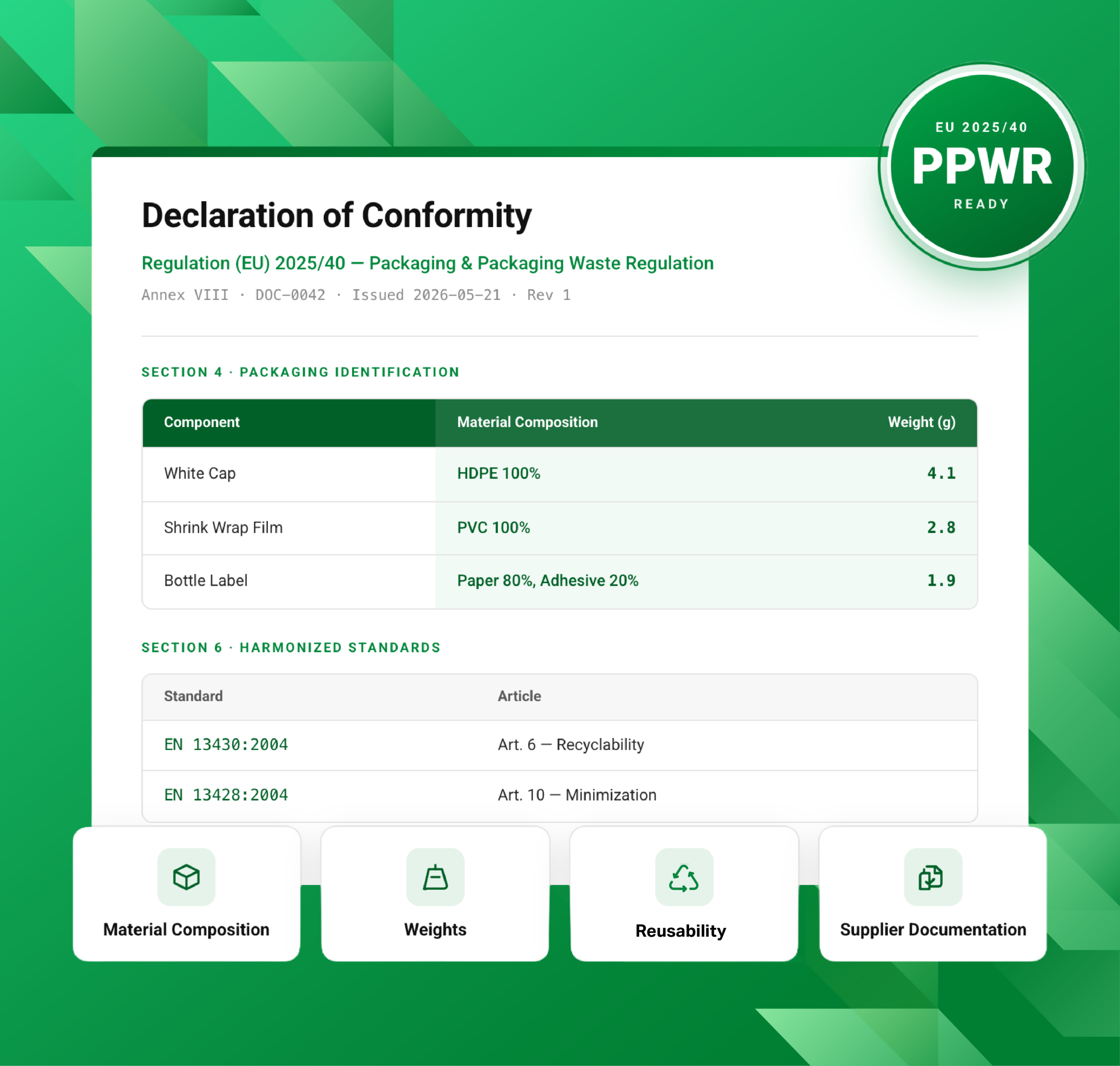
Specright builds compliance on the same spec data it already manages. It generates audit-ready PPWR Declarations of Conformity on demand, with an article-by-article checklist and gap detection, and produces EPR reports through its Lorax integration. Supplier Network collects documents, Compliance Insights flags regulatory exposure and EPR fees, and full version history keeps documentation traceable.
Is Specright SOC 2 compliant?
Yes. Specright holds a SOC 2 Type 2 report, issued September 22, 2026 by CyberGuard Compliance, LLP. It covers the Security, Availability, and Confidentiality criteria for August 1, 2025 to July 31, 2026. Specright also holds a SOC 2 Type 1 report for R&D Workbench, covering the security and the suitability of the design effectiveness of its controls.
Discover the Impact of Specification Management
Access our free resource library, and learn how to focus your data strategy, innovate, and drive your bottom line growth from industry experts.
-

Specright Doubles Down on AI, Launching Four Major Platform Advances
Read More →: Specright Doubles Down on AI, Launching Four Major Platform Advances -

Gartner®: Market Overview for PLM Software in Food and Beverage Manufacturing
Read More →: Gartner®: Market Overview for PLM Software in Food and Beverage Manufacturing -

Specright Launches Automated PPWR Declaration of Conformity Reporting
Read More →: Specright Launches Automated PPWR Declaration of Conformity Reporting